
倚天屠龙记
Tibetan medical thangkas draw global spotlight at symposium in Xizang_我的网站

A |
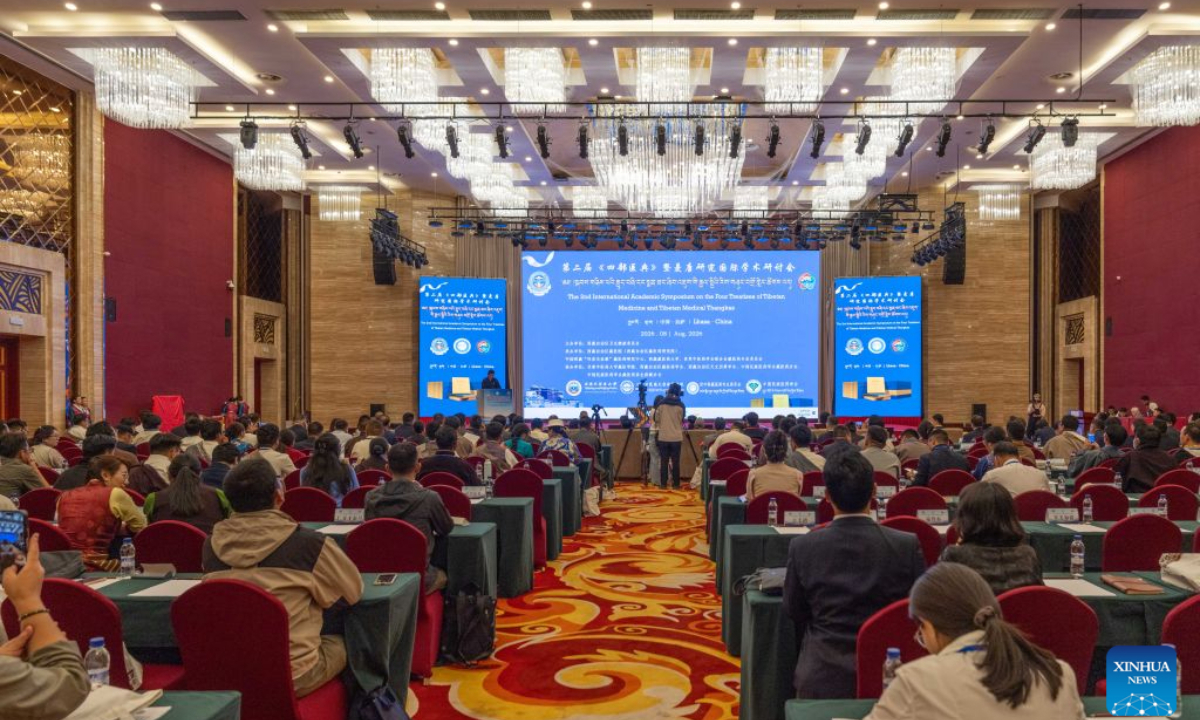
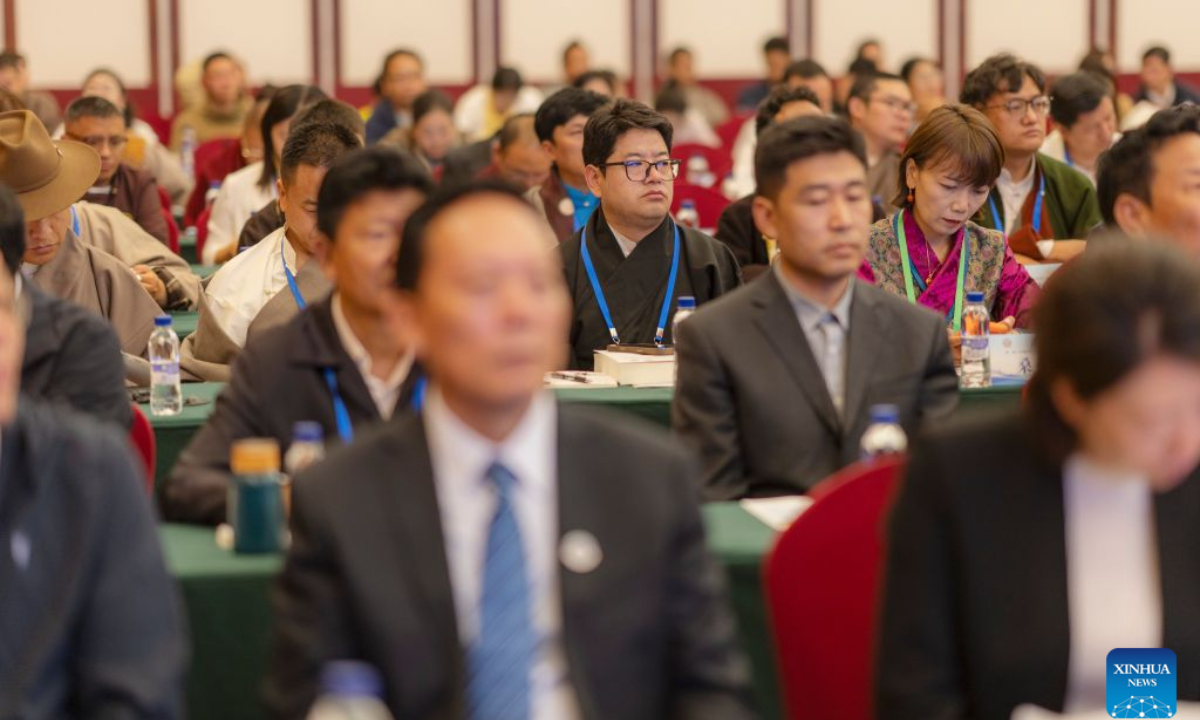
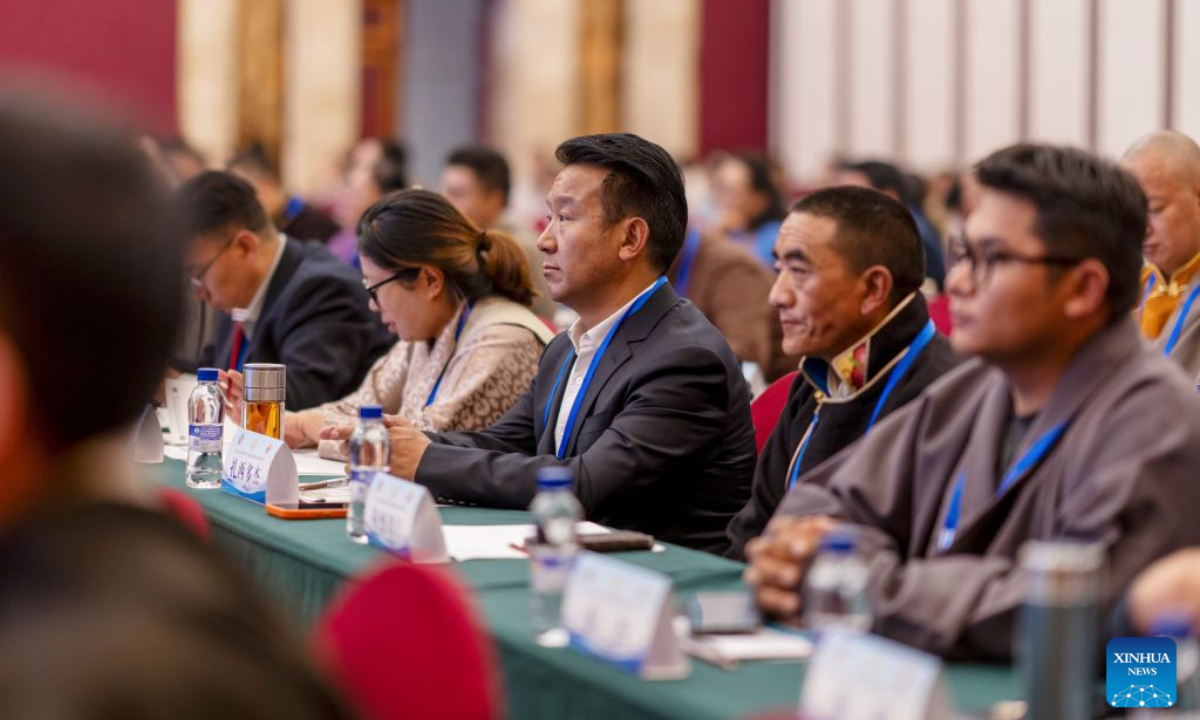
Held in the regional capital Lhasa, the second international academic symposium on "The Four Treatises of Tibetan Medicine" and Tibetan medical thangkas brought together more than 200 experts from China, Britain, Germany, Austria, Mongolia and Nepal.
Discussions centered on the historical evolution of the classic treatises, the iconographic interpretation of Tibetan medical thangkas, and pathways for modern clinical application and international cooperation.
At the symposium, a research center for Tibetan medical thangkas was inaugurated.
Written between the 8th and 12th centuries, "The Four Treatises of Tibetan Medicine" is the most influential foundational work on traditional Tibetan medicine. It was inscribed on the UNESCO Memory of the World Register in 2023.
Based on the work, the 80-scroll Tibetan medical thangkas serve as a visual teaching complement, covering diagnostics, pharmacology, preventive care and medical ethics. The medical thangkas were added to China's national documentary heritage list also in 2023.
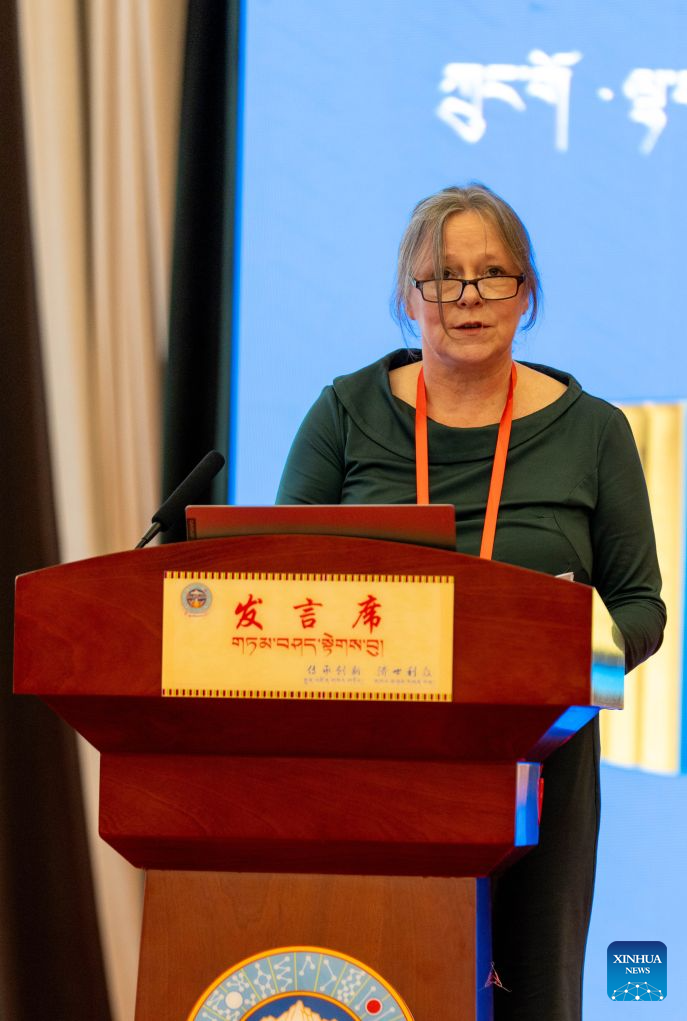
Among the participants was Katharina Anna Sabernig, a lecturer from the Medical University of Vienna, Austria, who first encountered Tibetan medical murals at Labrang Monastery in Gansu Province in 1994. She later returned and began delving deeper into the works.
"I saw these murals and I started to get deeper and deeper and to understand all this," Sabernig recalled.
Mary Caroline Wyatt, a scholar with dual British-Greek citizenship, began collaborating on an English translation of texts about Tibetan medical thangkas last September. She noted that complete English versions have long been scarce.
"Our translations target professional readers so that we preserve many specialized, traditional terms," said Wyatt.
The event was hosted by the regional health commission and co-organized by the regional Tibetan medicine hospital and Xizang University of Tibetan Medicine.
Xizang has formulated and implemented a series of policies on promoting Tibetan medicine and encouraging innovation. According to a government white paper released last year, the region has 51 public Tibetan medicine institutions, employing 5,287 professionals and operating 3,260 beds, up from 28 institutions, 2,232 professionals and 1,364 beds in 2012.
In April, China rolled out its first national recommended standard for ethnic-medicine disease classification and codes for Tibetan medicine.
Tsering, president of the regional Tibetan medicine hospital, said inscriptions on the UNESCO Memory of the World Register and China's national documentary heritage list have brought Tibetan medicine to a broader global audience.
"We will make the most of these opportunities to promote academic exchanges and clinical collaboration worldwide," Tsering said.
。 Agent背后,是工程化的系统性交付。 作者|Lynn 编辑|郑玄 企业正在为一堆「不产生价值的 Token」买单。这句 Palantir 公司 CEO 在节目里说的话,一经播出就广泛流传。抛开背后的商业竞争不谈,这句话被广泛传播,就是因为戳中了当下人们的体感,行业的注意力,渐渐从「模型多强,用了多少 Token」变成:这些 token 到底帮我解决了什么,智能是否真的转变成了生产力。 Agent 这个产品形态,当初有多 fancy,如今就有多祛魅。一个任务扔进去,模型自顾自跑上几个小时,token 哗哗地掉,交付回来的东西却不一定能用。 模型强是前提,但只靠模型不够,还需要整套让能力收拢、稳定交付的工程。 从这个视角来看百度搭子最近的成绩,会更有意思。WAIC2026 上,百度搭子入选大会「镇馆之宝」,并且是十大获奖展品中唯一的通用智能体产品。荣誉只是表象,背后的数字是:自全量上线以来,用户日均提问次数涨了 20 倍。

B | 这说明,用户不是来试几个新鲜问题,而是开始把资料整理、信息检索、PPT 生成、内容创作这些真实任务交给它。 01 单点能力跑不远 先说一个越来越公认的事实:做好 Agent,不是给模型套一个 API。 同一款底层模型,交给不同团队,跑出来的结果可以差很远。因为一个任务从进来到交付,中间要过很多关:理解用户需求,拆解小步骤,每一步该调什么工具、哪个系统,执行完还要判断质量、必要时自己返工,最后把过程里的经验沉淀下来。长链路操作鲁棒性考验的就是工程。 如果说模型决定了 Agent 智能的上限,harness 决定了它能不能稳定地摸到上限,它决定了模型往哪走、调什么、何时停、错了怎么办。 这也解释了智能体赛道早期的一个现象。不少产品靠一个亮眼功能,或者蹭一波模型红利跑了出来,热闹一阵,没多久就很少再被提起。Agent 产品多,卡在半途的 Agent 也很多。

C | 因此在 Agent 类的产品中,除了灵光一现的设计,更需要踏实的技术积累。百度搭子在信息检索这一关上幻觉更少、找得更准,靠的不仅仅是模型的智能,还有百度多年搜索的经验——怎么判断信息可信、怎么在一堆结果里定位到有价值的那条,这些经验被搬进了 Agent 的执行链里。再往上一层,每一步该调哪个工具、哪个系统,背后是百度搜索、网盘、地图等成熟能力被接入同一条执行链。 在 OpenClaw 生态的公开 Agent 评测 PinchBench 上,百度搭子以 93.3% 和 93.2% 拿下前两名。真正值得看的是一组对照:同一款底层模型,放进百度搭子的框架能跑到 93.3%,换到 Anthropic、OpenAI 自己的框架里,则是 89.0% 和 91.6%。模型没变,成绩的差异,就说明了外面这层工程的实力。

D | 工程之外,还有一关平时不被注意,但做不好不但会影响产品体验,甚至会带来后果的事情:安全。Agent 要替人类删文件、改系统、发数据,权限就不能是完全敞开的。

E | 百度搭子从权限、审计、隔离、确认四个维度兜底——员工能用哪些技能、碰哪些数据是限定的,所有操作可追溯,沙箱和本机环境完全隔离,删除、外发这类高危动作必须人工点头才执行。

F | 这套东西不性感,却决定了企业客户敢不敢把 Agent 放进真实流程。

G | 大规模落地还有另外一个关键:成本。6 月的引擎升级里,在任务效果不降的前提下,执行过程的 token 消耗压低了 75%。

H | 约等于用四分之一的 token,做完了原来的工作量。而 token 能压下来,又跟百度自己有模型、有云、有芯片布局分不开。

I | 正是因为每一层都有布局,联合优化带来的空间才能够更大。 换句话说,跑出一个搭子,背后是一整个百度。

J | 02 从个人到企业,在真实任务里长出场景 工程是说给行业听的。另一方面,对用户来说,一个 Agent 好不好,就一条,能不能把他真正头疼的事办了。

K | 老万,70 岁,长白山的野生动物摄影师,手里攒了一百多 TB 的红外相机和监控素材。他最头疼的不是拍,是看——几个小时的视频,靠人眼一帧帧回放,挑出有动物出现的画面,眼睛先扛不住。他不会写代码,也没有团队,只是用平常说话的方式给百度搭子下了个指令:把有野生动物的画面挑出来、单独建个文件夹、再按我的习惯整理一份监测日志。原来要靠人眼熬着一帧帧回放的活,现在他说完需求就能拿到挑好的片段和整理好的日志——70 岁的眼睛,从这道工序里解放了出来。 杭哥,在杭州开缝纫教室,教零基础学员三天速成。他最耗神的环节,是把学员「想要通勤一点」「想显瘦但别太夸张」这样模糊的话,变成能落地的服装方案。过去要反复沟通、反复改图,一张效果图能耗掉一天。现在他把学员的描述丢给百度搭子,效果图、版型建议、面料推荐、制作成本,连带上课用的课件大纲,一次对话就出来了。 这两个案例的共同点是,用户并没有在学习一套复杂软件,也没有为了某个垂直需求单独搭系统。他们只是把目标说出来,百度搭子把背后的工具、数据和流程组织起来。

L | 这两个人都是自己所在领域的专家,没有技术背景。他们的麻烦过去也不是花钱就能解决的。一个摄影师、一个缝纫老师,不会为筛素材、画版型去搭一套系统,市面上也没有正好接住这种活的工具。现在可以实现的,是过去他们够不着的一副外挂:一句日常的话,就能调动一整套本来不属于个人的能力。 能实现如此专业的系统性能力交付,可以从百度搭子成长路径来看。 百度搭子的成长路径,并不是先做一个轻量聊天工具,再慢慢加功能。更准确地说,它一直围绕「完成任务」来扩展能力:个人版补齐多端共享记忆、Browser Use、PPT 生成和自媒体专业套件,企业版则把这些能力带进团队协作、权限管理和组织资产沉淀。 最新长出来的一个场景,有点出人意料。世界杯期间,百度搭子进了央视频的《超级绿茵场》,在「AI 战术分析时刻」里,把进球、跑位、防守漏洞,拆成普通观众能看懂的战术。把同一套分析能力挪到看球这件事上,它就多出了点陪伴的意味。

M | 有意思的是,让它能陪你看球的,正是它平时用来干活的那套分析能力,它能去到哪些场景,其实不由它预设,而由有人把什么样的问题带到它面前。 03 一个 Agent 能走多远,取决于背后的系统 一个 Agent 能走多远,短期看它现在能做什么,长期看它靠什么越做越好。 答案在那条链的内部。全栈的各层之间,不仅在技术层面能够默契耦合的,也成为了数据优化的天然通道。智能体被用起来,产生真实的任务数据,这些数据回过头优化模型;模型的需求,又牵动着芯片和算力怎么调度;产业里的真实场景,则反过来检验这个智能体到底有没有解决问题。转得越快,迭代越快,成本压得越低,落地也越深。 所以,百度搭子站上 WAIC『镇馆之宝』的位置,并不是一个孤立的展会荣誉。公开评测里的成绩,说明它在长任务执行上跑出了结果;央视频世界杯里的战术分析,说明它能进入高关注度的大众内容场景;日均提问次数 20 倍增长,说明用户正在把真实任务交给它。

N | Agent 这场比赛当然才刚开始。

o | 但至少在这个阶段,行业已经不只是在看谁的模型更强、谁消耗的 Token 更多,而是在看谁能把智能稳定地转化成结果。百度搭子这次被放到 WAIC 智能体 C 位,真正被看见的,也是这件事。 *头图来源:百度搭子 本文为极客公园原创文章,转载请联系极客君微信 geekparkGO 已无更多数据。
Current article:http://www.cuancuguanzhongnieqinyazhun.cyou/h0k/20260826/4592.pptx
Published on:17:01:33


