
孤岛惊魂
中国三人女篮这样突破_我的网站

A |
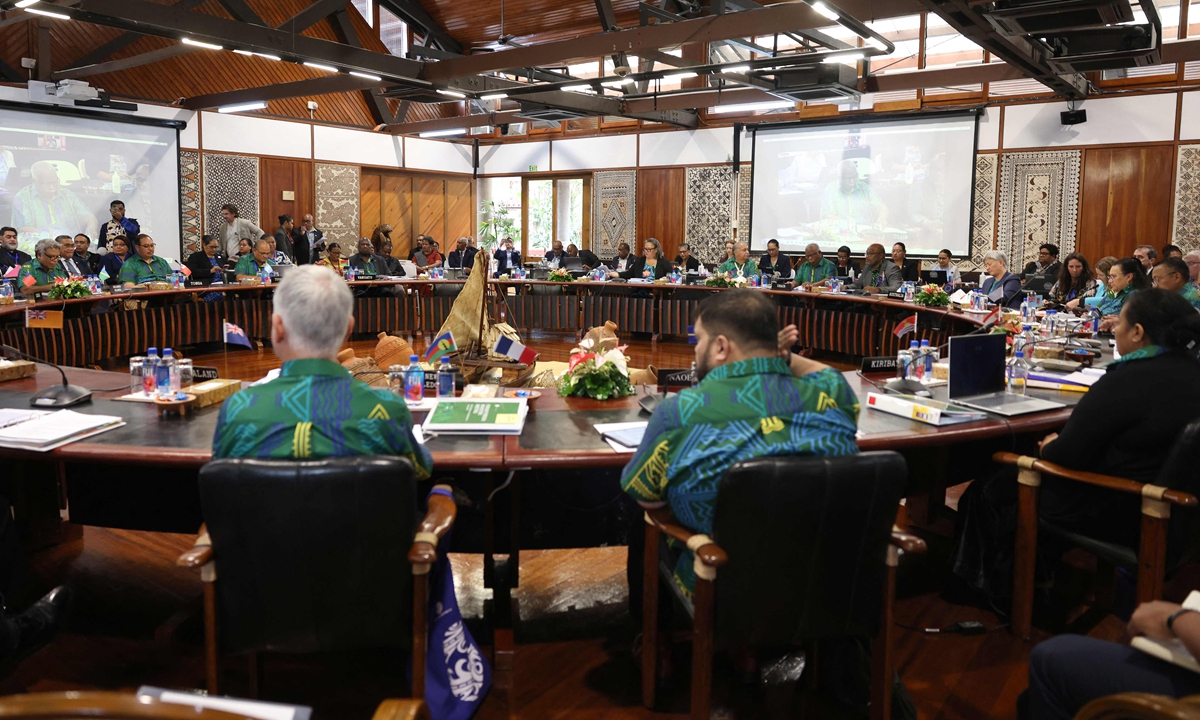
As foreign ministers and senior representatives from Pacific nations convened in Suva for the Pacific Islands Forum (PIF) to discuss key regional issues, New Zealand's foreign minister reportedly pushed to secure a joint statement condemning China's missile tests in July, however, his effort ultimately fell flat. A Chinese expert described the outcome as a clear rebuke to Canberra and Wellington's ingrained habit of speaking for the Pacific, saying the two countries must come to terms with a shifting reality: Pacific Island states are increasingly unwilling to let Australia and New Zealand dictate who their friends, foes and perceived security threats should be.
Pacific Island foreign ministers failed to agree on Friday to a joint response to China's missile launch in July, with further discussions expected at the Pacific leaders meeting at the end of August, said New Zealand Foreign Minister Winston Peters, according to Reuters.
According to a report from Radio New Zealand, there has not been a unanimous statement from Pacific nations about China's test-launch in July, and Peters said New Zealand had been pushing for one. Peters claimed that the Pacific missed an opportunity not to issue a joint statement soon after China's launch.
Australia's Foreign Minister Penny Wong said before the meeting that she hoped China took note of the "very clear response" already sent from the Pacific about the test, according to AFP.
Peters' push for a joint PIF statement on China's missile tests, together with Wong's remarks, are less about technical security concerns than an effort to turn their own anxieties about China into a regional agenda and pressure Beijing under the forum's collective banner. His description of Pacific Island countries' refusal to single out China as a "missed opportunity" also reveals little respect for their independent judgment, Chen Hong, director of the New Zealand Studies Centre, East China Normal University, told the Global Times.
The result is a clear rebuke to Canberra and Wellington's long-standing habit of arrogantly "speaking for" the Pacific, as island states are increasingly unwilling to let Australia and New Zealand decide who their friends, foes or security threats should be, said Chen Hong.
The Chinese People's Liberation Army Navy said on July 6 that one of its strategic nuclear submarines successfully launched a strategic missile toward relevant high seas of the Pacific Ocean, which landed precisely within the designated waters. China notified relevant countries in advance of the test launch, a move that demonstrates the openness and transparency of the Chinese armed forces, Chen Xi, a spokesperson for the Ministry of National Defense, said at a press conference on July 7.
Chen Hong also noted that Peters' recent China-related rhetoric has become increasingly populist and hawkish as elections approach in New Zealand. "Such an approach risks undermining New Zealand's long-standing reputation for pragmatic, independent, and rational diplomacy," Chen Hong said.
In July, during a parliamentary debate on New Zealand's Covid-19 pandemic response, Peters, who is also leader of the populist New Zealand First party, told a Chinese-born lawmaker to "go back to your own country" while mocking his English proficiency. His remarks drew wide criticism in New Zealand.
Yet Australia and New Zealand continued to amplify missile-related issues and great-power rivalry, pushing the "China threat" narrative to the center of the regional agenda while sidelining the priorities that matter most to Pacific Island nations, said Chinese analysts.
Chen Hong noted that for island states, the most urgent concerns are not geopolitical competition but everyday challenges: climate change, energy security, development financing, infrastructure and economic resilience. By shifting the focus from these concerns to strategic rivalry among major powers, Australia and New Zealand risk distorting the region's real priorities and undermining the aspirations of Pacific Island countries.
According to an introduction on the forum website, "The Forum's Pacific Vision is for a resilient region of peace, harmony, security, social inclusion and prosperity, so that all Pacific people can lead free, healthy, and productive lives."
At the opening of the meeting, Rick Houenipwela, foreign minister of the Solomon Islands and chair of the meeting, said that the Pacific's agenda must continue to be "conceived by the Pacific, shaped by the Pacific and only by the Pacific," according to Reuters.
Chen Hong said Pacific Island nations have made their position clear: differences with China do not mean signing up to the strategic agendas of Australia and New Zealand. A growing number of island countries refuse to be trapped in the black-and-white binary choice of siding with either China or the West.
If Canberra and Wellington keep pushing rhetoric beyond the regional consensus, they risk undermining the very institution they claim to support. The PIF's strength lies not in issuing confrontational statements, but in preserving Pacific unity. Turning that consensus into a tool for pressuring China would erode the forum's cohesion and weaken its central role in the region, said Chen Hong.
。

B | 亚洲杯前,中国队在最初申报名单时用黄琨和罗欣棫替换了曹君伟和万济圆,临赛前又重新将万济圆列入名单。主教练许佳敏解释说,主要考虑的是队伍磨合问题。“当参赛四人名单有两名队员调整的时候,球队的整体打法体系会有比较大的变化,也需要更多的时间去磨合。大赛前这个风险还是比较大的,特别是亚洲杯我们还是希望以最好的整体实力、最好的状态去冲击最好的成绩,全力以赴去冲击冠军。”许佳敏说。夺冠那一刻,王丽丽将球抛向空中,大声欢呼。29岁的她是中国三人女篮的核心,将投篮与传球拿捏得恰到好处。

C | 小组赛对阵澳大利亚队时,王丽丽一次次冲击对手防线,防守端频频送出盖帽,这样的表现让国际篮联官网文章称王丽丽是对手的“噩梦”。进入淘汰赛,中国队在面对泰国队和日本队时身高占据优势,王丽丽总能适时将球送到中锋张芷婷手中,轻松完成进攻。赛事最有价值球员,是对这位老将的最好褒奖。

D | 张芷婷是中国队的支柱,身高1米95的她充分利用篮下优势,成为本届赛事队内得分王,还在保护篮板球方面作出了很大贡献。“这次是一个全新的团队,在任何一个全新的赛场,我们都要拼出全力,才能得到我们想要的。”张芷婷在夺冠后说。万济圆经过东京奥运会、世界杯的历练快速成长,与张芷婷构成了中国队的内线屏障。亚洲杯冠军会给即将迎来20岁生日的她注入更多信心。

E | 黄琨是这支国家队中的新人,尽管有时会受到犯规困扰,但她也能在关键时刻挺身而出。

F | 决赛面对澳大利亚队的高强度防守,黄琨用一记跳投和两记远投为中国队打开局面,球迷惊呼她是“决赛型选手,越紧张越强大”。

G | 自2018年亚运会夺冠以来,中国三人女篮在最近四年的国际和洲际大赛上连创佳绩。进入巴黎奥运周期,她们已连获世界杯季军与亚洲杯冠军,阵容框架也比较稳定,具备在巴黎奥运会上继续冲击更高位置的实力和可能性。张芷婷说:“过去几年的荣誉已经过去了,从今年开始,我们是全新的,会重新为我们的梦想而拼搏。”如她所言,中国三人女篮将带着亚洲杯冠军的这份荣耀,以梦为马,奔向下一个目标。
Current article:http://www.cuancuguanzhongnieqinyazhun.cyou/list_0dc2wxd/jpf6.html
Published on:21:57:20
我的网站相关阅读
- 被追尾后SU7自动打120电话:车主获救被小米售后团队感动 雷军回应
- 争鲜到胃!厦门“海鲜大军”陆续上岸
- 名嘴称勇士已无争冠实力 库里离开才能再夺冠
- China unveils refined lunar map, empowering future moon exploration
- 'China Is Awesome': Elon Musk recommends visiting China
- 山西省人民政府驻北京办事处原副主任张建平被开除党籍
- 《天堂》开发商生存射击游戏《TIME TAKERS》9月全球测试
- 基莱斯谈击败浙江:上半场发挥有所欠缺,中场时教练点出不足
- 美国宣布对电动汽车等中国商品加征关税,中方作出回应
我的网站最新文章
- 【观点】申银万国:蛋白粕远月价格有支撑,美豆优良率下降及进口成本抬升
- 北摩高科:拟1.2亿元—1.8亿元回购股份
- 螃蟹热销正当时,公蟹肥美母蟹还得等一等
- 卢秀燕喊话:继续扩大整合,2028年一定要让国民党重新“执政”
- 天猫上线微信小程序天猫超市小铛家 要在微信内开展电商业务?
- 赛迪顾问:国家级园区培育未来产业关键举措与提升路径
- 教育部:幼儿园不得教授小学阶段的课程,小学应将一年级第一学期设置为入学适应期,小学一年级不布置书面家庭作业
- 美方拿仲裁书施压逼中国认栽,中国三箭齐发回应,最坏情况下的应对方案已经摆在台面上,欣荣谈星座,原创 美方拿仲裁书施压逼中国认栽,中国三箭齐发回应,最坏情况下的应对方案已经摆在台面上
- 数百海外“弃儿”致函尹锡悦:要求调查当年收养程序是否违规作假
- 原创 苏梅岛动物园死亡威胁风波,烧到了曼谷,涉“50万悬赏”外国游客被撤签
- 重庆市綦江区:打造全国网络安全实训标杆以及西部重要的数据灾备节点
- 美记:若开启库明加的签换交易 公牛获现金或次轮 老鹰得选秀互换
- Mayor says West Maui to reopen to tourism on Nov. 1 after fire
我的网站随机推荐
- 湖南推动全产业链数字化转型
- 大丑闻曝光!韩国足协性贿赂20名外籍裁判,涉及中国队比赛
- 专栏作者质疑哈登续约:37岁老将合同恐成隐患
- 震惊法国的囚车劫案背后:贩毒黑帮活动日益猖獗
- 新推出的Tremolo产品“multi flash”被微信屏蔽,会议很尴尬。
- 炎炎烈日送清凉
- 成都疫情形势整体向好
- 经过基因改造的浮萍可能是一种更可持续的生物燃料来源
- @2025年研考生,考试期间天气预报+考前提醒,请查收→
- PS Store畅销游戏榜出现排序故障 按字母序排列导致错位
- Celina Jaitly Approaches Mumbai Court With Domestic Violence Case Against Husband Peter Haag
- 漳州公路部门闻汛而动保通畅
- 杭台高铁温玉段昨天开通运营 玉环圆梦高铁 最快1小时47分抵杭