
我们的爱
Hollywood Actor Arnold Vosloo Cast in Vijay Devarakonda's Film_我的网站

一 | South African-American actor Arnold Vosloo is all set to debut in Indian cinema. Best known for his chilling turn as villain in films like The Mummy (1999) and The Mummy Returns (2001), Hollywood actor Arnold Vosloo has reportedly joined the cast of Vijay Deverakonda's film. Tentatively titled, VD14, the period drama is being directed by Rahul Sankrityan. Arnold to debut in Indian cinema Arnold Vosloo was spotted on the sets of Vijay Deverakonda's film, VD14, accompanied by actor Vinod Sagar. The picture has sparked fresh buzz around the project and has quickly gained traction on social media. Many netizens have started predicting that The Mummy star will play antagonist opposite Vijay in the film. Since the film is set between 1854 and 1878, during the British colonial rule, many speculate that Vosloo may play a Brit officer. The plot is reportedly inspired from historical events, exploring themes of resistance, revolt and identity. Director Rahul Sankrityan reportedly chanced upon Arnold after his impressive filmography. VD14 marks a reunion of Vijay Deverakonda and Rahul Sankrityan after their successful earlier collaboration Taxiwaala (2018). The film’s first look was unveiled on Vijay’s birthday (May 8). The poster shows the young actor like a meditating warrior. The also touches Rayalaseema backdrop, and Vijay will speak in the region's accent for the first time. Two films are extremely demanding Meanwhile, Vijay Deverakonda made a revelation on what he is doing it for the first time. In what is called an ‘update to the fans,’ the actor surprised himself by working on two films. He also added that both films are extremely so demanding that they have taken his life. Vijay also gave a sneak peek into what’s happening in his life of late. From new watch collection to gadgets to not missing out on anything that’s spiritual(pooja), Vijay reveals that he’s always trained and game for the war. Also Read: It’s Vijay Devarakonda’s birthday today! Take a look at his top songs today。
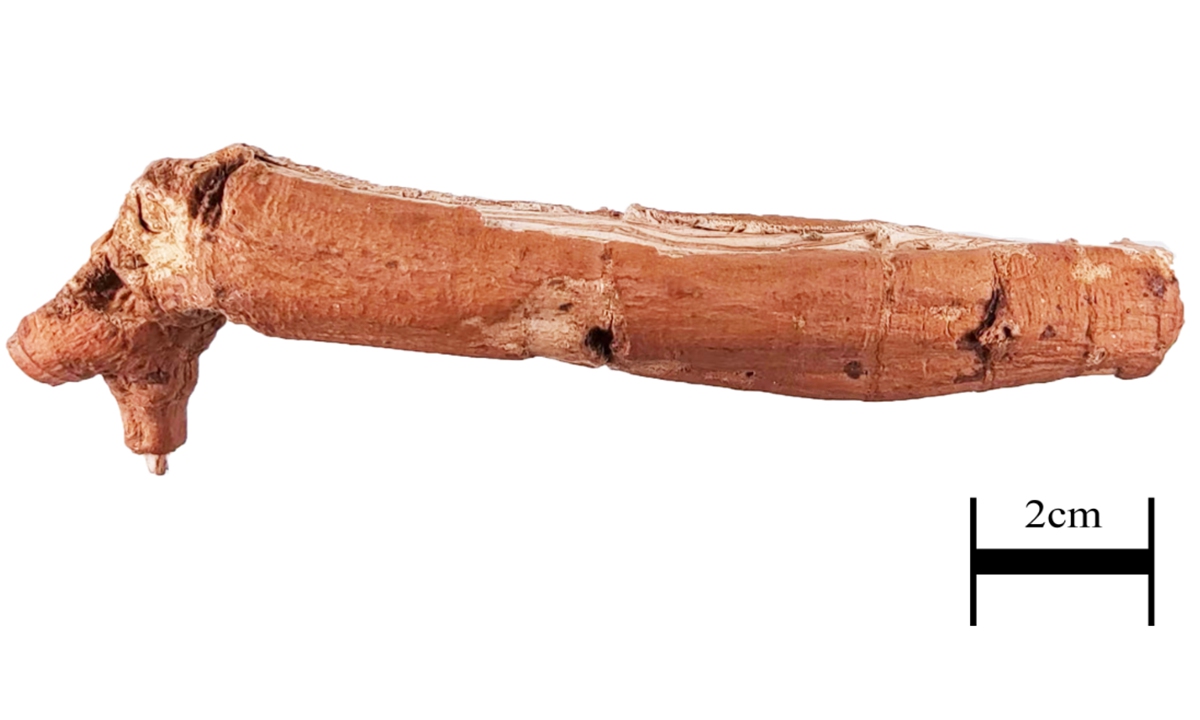
A Chinese research team has identified a new potential target to develop antidepressant drug from Qingyangshen, or Root of Auricledleaf Swallowwort, a traditional ethnic medicinal plant long used in Southwest China's Yunnan Province, according to Kunming University of Science and Technology, Science and Technology Daily reported Sunday.
The team, led by professors Xu Tianrui and Xiang Cheng from the university's School of Life Science and Technology, found that Qingyangshen glycosides, the plant's core active compound, can alleviate depression-related behaviors by simultaneously suppressing inflammation, reducing oxidative damage and stabilizing neurotransmitters in the brain.
The findings were published in the international journal Phytomedicine.
Depression has become a widespread mental health disorder globally, while existing clinical drugs fail to provide effective treatment for more than 30 percent of patients, according to the researchers. Previous studies have established a strong link between chronic inflammation and depression, but existing anti-inflammatory drugs have limited targeting capabilities, underscoring the need for new therapeutic targets and lead compounds.
Qingyangshen, a plant of the Cynanchum genus in the Apocynaceae family, has long been used as a traditional medicine by ethnic groups including the Naxi, Yi and Bai peoples in Yunnan, mainly for treating neurological conditions such as epilepsy and neurasthenia.
The researchers systematically examined the pharmacological effects of Qingyangshen extract and its core active compound, Qingyangshen glycosides. Tests using mouse, zebrafish and fruit fly models repeatedly showed that the compound significantly improved depression-related behaviors induced by inflammation, according to the report.
To identify the compound's target, the team developed a dual-discrimination model for four subtypes of prostaglandin E2 receptors and combined it with AI-powered machine learning. The researchers screened hundreds of G protein-coupled receptors and identified the prostaglandin E2 subtype 4 receptor as the direct target of Qingyangshen glycosides.
Multiple molecular experiments confirmed that the compound binds directly to the receptor and acts as an inhibitory ligand. Further experiments involving animals with the receptor knocked out in the hippocampus showed that the antidepressant effects of Qingyangshen glycosides disappeared completely when the receptor was absent, providing the first in-vivo evidence that the receptor is essential for the compound's therapeutic effects.
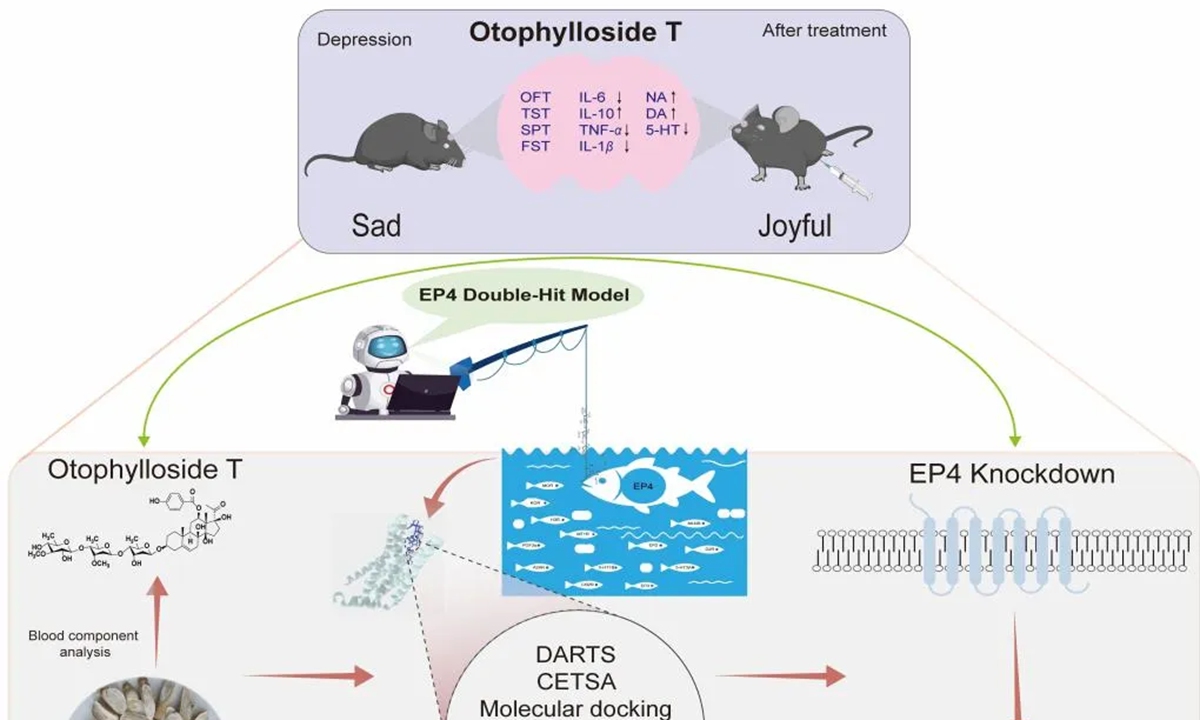
The study establishes the prostaglandin E2 subtype 4 receptor as a potential new target for antidepressant drug development and points to a new approach to treating depression through inflammatory pathways. It also identifies Qingyangshen glycosides as a potential lead compound for developing highly targeted anti-inflammatory antidepressants, creating a research chain from ethnic medicinal plants and active compounds to drug targets and new drug development.
Global Times
。
Current article:http://www.cuancuguanzhongnieqinyazhun.cyou/list_16cs0/ca5gk.html
Published on:15:43:06


