
疯狂的石头
China accelerates LEO satellite deployment with two launches in 12 days, but gap remains in launchpad efficiency, rocket reusability: expert_我的网站

A | Some Western countries aiming to decouple from China's supply chains may face staggering costs: an extra $23.6 trillion by 2050, according to estimates. World Bank data shows that China's manufacturing value added accounts for nearly 30% of the global total, ranking first for 16 consecutive years. In new energy, 80% of key materials are tied to Chinese, production, making it difficult to bypass. As European and U.S. automakers build plants in Morocco and Mexico, Chinese suppliers follow right behind. Observers note supply chains are like rivers — barriers can be built, but its underlying course cannot easily be changed. Instead of focusing on decouple, countries should consider how to achieve mutual benefit. 
 。
。
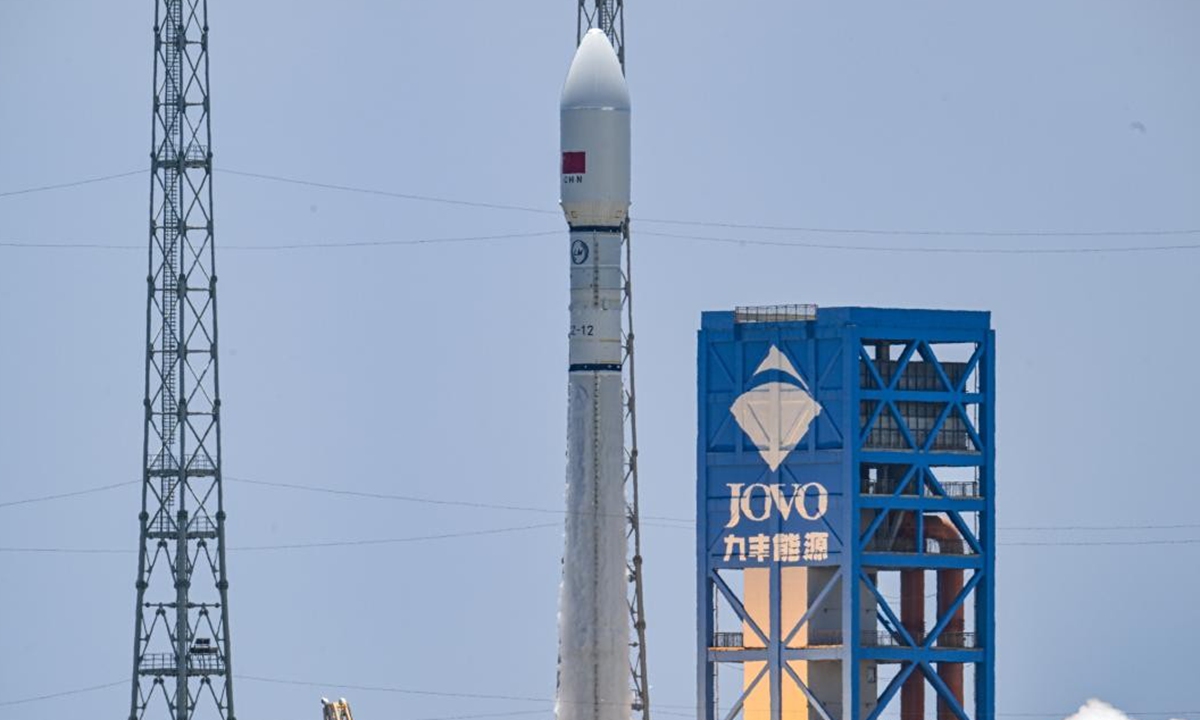
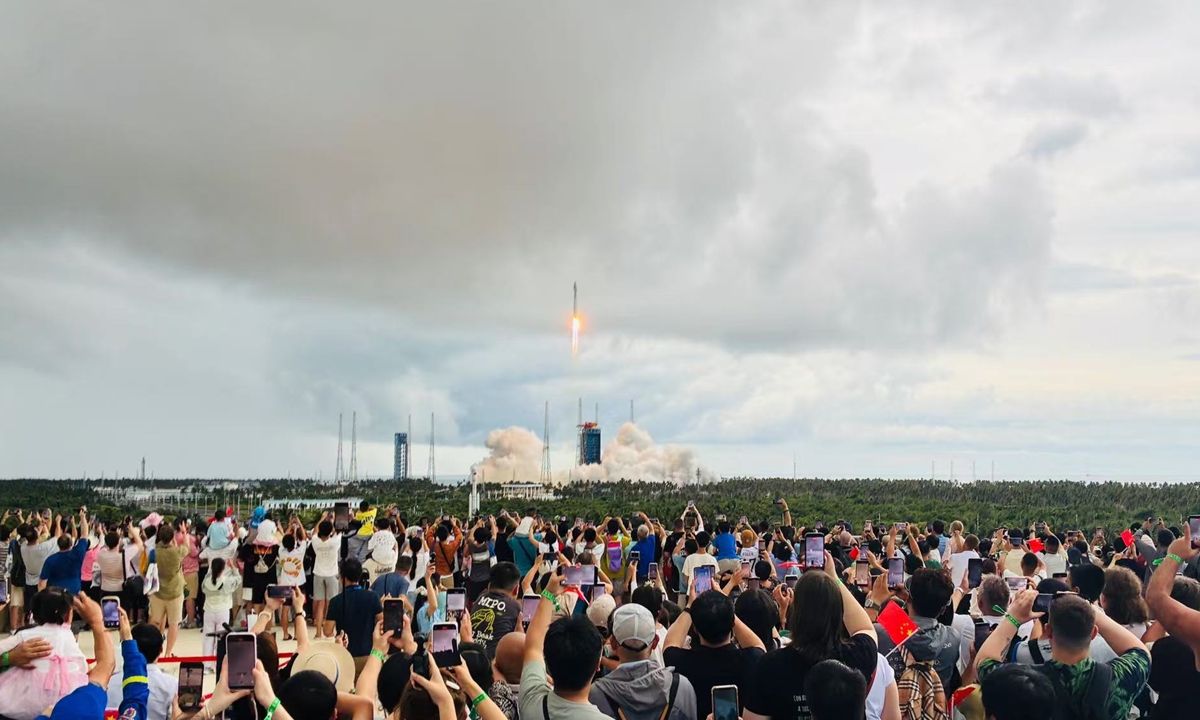
Two successful launches among China's recent frequent moves caught particular attention of space watchers - the 24th group of low-Earth orbit internet (LEO) satellites aboard a Long March-12 rocket was sent from a commercial spacecraft launch site in the southern island province of Hainan on Sunday, 12 days after the 23rd group of LEO satellites aboard a Long March-8A rocket was launched from the same Hainan site on August 4.
Sunday's mission marked the 663rd launch of the Long March series of carrier rockets, which on Monday sent an SEO satellite into preset orbit, per Xinhua.
Experts said the launches of two groups of LEO satellites within 12 days underlined that China is notably accelerating its pace of building its satellite internet constellation.
"The launch of LEO satellites has now entered a regular and cyclical rhythm, with batches of satellites continuously being sent into orbit at relatively stable intervals," Kang Guohua, a senior member of the Chinese Society of Astronautics and a professor of Aerospace Engineering at Nanjing University of Aeronautics and Astronautics, told the Global Times on Monday.
China launched the first group of LEO internet satellites on December 16, 2024, proceeding to the 24th batch in about 20 months. Kang said three major production and launch "assembly lines" are supporting the effort: satellite factories featuring centralized design in Beijing, coordinated supply chains and mass production; rockets with streamlined launch and testing procedures and multiple configurations; and launch sites capable of supporting routine constellation deployment.
The Long March-12, which played a key role in the latest LEO satellite launch, is China's first 4-meter-class single-core-stage carrier rocket and was specifically developed for commercial launch needs. It is about 62.6 meters long, has a liftoff mass of 430 tons and can carry more than 12 tons to low-Earth orbit. Its first stage is equipped with four 1,250-kilonewton pump-fed liquid oxygen-kerosene engines and uses a newly developed coal-based aerospace kerosene, according to Shanghai Academy of Spaceflight Technology.
The rocket adopts a "three-horizontal" launch preparation model: horizontal assembly, horizontal testing and horizontal transportation. Depending on mission requirements, it can use fairings with diameters of 4.2 or 5.2 meters and support both single-satellite and multi-satellite launches into different orbits.
"This flexibility makes the Long March-12 particularly suitable for the 'one rocket, multiple satellites' model required for constellation deployment, making it one of the main launch vehicles currently used for LEO constellation missions," Kang said.
The mission also highlighted the launch site's growing ability to support high-frequency launches. The rocket took only two and a half days from being transported to the launch area to liftoff, setting a record for the shortest time a rocket occupied the launch position at the site, Kang said.
Despite the rapid progress, experts cautioned that the 228 satellites currently in orbit remain some distance from the ultimate goal. China's satellite internet project has a long-term goal of deploying nearly 8,000 satellites and is now in an accelerated "weaving" phase.
China's advantage lies in its ability to control costs and boost production efficiency once satellite manufacturing reaches mass-production scale, another expert surnamed Liu told the Global Times.
"Whether it is the production capacity of AI centers or the factory in Hainan, which has an annual satellite manufacturing capacity of 1,000 units, satellite production itself is not the problem," Liu said. "More bottlenecks lie in the operational efficiency of launch pads and the rocket payload and recovery technology."
The real challenge lies in rocket reusability. Only by lowering launch costs and increasing launch frequency can China sustain a pace of more than one launch per week. This is also the strategic significance of accelerating the development of reusable rocket technology, including the Long March-10B and privately developed rockets, Kang further noted.
Chinese Academy of Engineering academician Deng Zhongliang previously said in an interview that satellite internet will serve as an indispensable space-time infrastructure for 6G, enabling emerging industries worth trillions of yuan, including the low-altitude economy, advanced autonomous driving and the Internet of Things (IoT).
。
Current article:http://www.cuancuguanzhongnieqinyazhun.cyou/news/20260826_58212.doc
Published on:15:23:52
我的网站相关阅读
- 卡梅伦的机械女孩:阿利塔:战争天使
- 9秒39!中国机器人打破由博尔特保持的9秒58人类百米世界纪录
- Chinese FM responds to Trump’s order to scale back military exercises with South Korea
- 斯科特:科比极具亲和力 曾不顾赛后采访和11岁的小孩促膝长谈
- LONGi becomes official partner of FC Bayern Munich, uniting solar energy innovation and football passion
- 路上的AMD射线跟踪卡
- China-made humanoid robots are rapidly moving out of labs into real-world industries: FM
- From chips to sunflower seeds and dumplings, Washington's sanctions tear away its own fig-leaf
- 一句话开启“光污染”模式:雷蛇宣布与亚马逊Alexa语音助手合作
我的网站最新文章
- 涓涓流“多闪”视频社交应用内部版本下载,腾讯QQ/TIM秒锁定链接
- 没状态!阿门上半场3中1得到2分2板2助 罚球4中0得加练
- 法鹰无分成!DO:马尔穆什强制买断费用为5000万镑+1000万镑浮动
- Karan Johar Celebrates Homebound Oscar Shortlist And Expresses Gratitude To The Team
- 马塔担任颁奖嘉宾,为老队友B费颁发PFA赛季最佳球员奖杯
- 巴特勒谈体型劣势:不想说我们更小 我们只是没那么高 但斗志十足
- 武圣:男人打女子比赛是降维打击 女性支持跨性别参赛会让你失业
- SpaceX拟投千亿美元建最大发射场,马斯克:支持一天30次“星舰”发射
- 受台风影响,27日至29日杭温高铁、杭台高铁、金温铁路、金台铁路、甬金铁路、杭深铁路部分线路途经列车临时停运
- China launches 7 new satellites
- Palak Muchhal Reacts to Palash Muchhal and Smriti Mandhana's Wedding Debacle - Exclusive
- 【研报观点】8月26日聚丙烯最新观点汇总
- 范弗里特:我们能创造出更好的投篮机会 也要继续依靠拼抢篮板
我的网站随机推荐
- AI opens new creative doors, raises new concerns across China’s screen industry
- China's Pingyao International Photography Festival draws nearly 20,000 works from over 2,600 photographers
- Gen Z visitors explore Guizhou's path to global markets
- 小波特:受伤前我是杜兰特&字母哥的结合体 比前者运动能力更强
- 陈涛更衣室喊话球员:我们别去骗球迷,别太爱惜自己羽毛了
- 赵发庆:队员们的身体状态很疲惫,我们做好了困难的准备
- Akhanda 2 Crisis: Balakrishna’s Team Strategizes New Release Timeline
- Ali Fazal to Collaborate With Shakun Batra for a Film on Social Media & Modern Relationships
- Heavy rain batters Guangdong
- Henan promotes paid leave policy to encourage flexible vacations
- Exclusive: “Watching Dharmendra Was Like Watching Humanity at Its Nicest" - Rati Agnihotri
- 长安四号登月视频首次发布
- ️意足协官方:教皇方济各离世 意甲至业余全级别联赛均延期