当前位置:首页 > 建站教程 > 游戏人生
作者:马徒成扁
来源:a站被罚12万元
发布时间:2026-08-26

游戏人生

Tibetan medical thangkas draw global spotlight at symposium in Xizang_我的网站

蜜月计划

一 |     

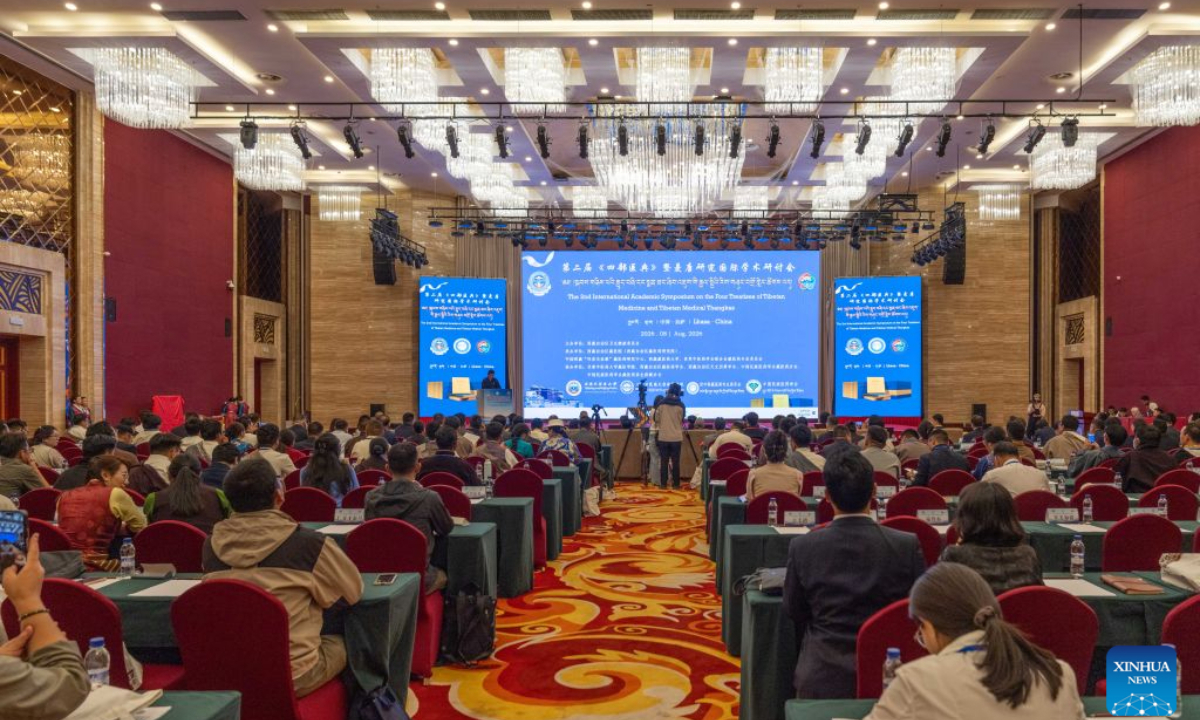
The second international academic symposium on The Four Treatises of Tibetan Medicine and Tibetan medical thangkas is held in Lhasa, southwest China's Xizang Autonomous Region, Aug. 20, 2026. An international symposium opened in southwest China's Xizang Autonomous Region on Thursday to shed light on the growing global interest in traditional Tibetan medicine and its visual illustrations drawn on thangkas. Held in the regional capital Lhasa, the second international academic symposium on The Four Treatises of Tibetan Medicine and Tibetan medical thangkas brought together more than 200 experts from China, Britain, Germany, Austria, Mongolia and Nepal. Discussions centered on the historical evolution of the classic treatises, the iconographic interpretation of Tibetan medical thangkas, and pathways for modern clinical application and international cooperation. Written between the 8th and 12th centuries, The Four Treatises of Tibetan Medicine is the most influential foundational work on traditional Tibetan medicine. It was inscribed on the UNESCO Memory of the World Register in 2023. Based on the work, the 80-scroll Tibetan medical thangkas serve as a visual teaching complement, covering diagnostics, pharmacology, preventive care and medical ethics. The medical thangkas were added to China's national documentary heritage list also in 2023. (Xinhua/Tenzing Nima Qadhup)
    The second international academic symposium on "The Four Treatises of Tibetan Medicine" and Tibetan medical thangkas is held in Lhasa, southwest China's Xizang Autonomous Region, Aug. 20, 2026. An international symposium opened in southwest China's Xizang Autonomous Region on Thursday to shed light on the growing global interest in traditional Tibetan medicine and its visual illustrations drawn on thangkas. Held in the regional capital Lhasa, the second international academic symposium on "The Four Treatises of Tibetan Medicine" and Tibetan medical thangkas brought together more than 200 experts from China, Britain, Germany, Austria, Mongolia and Nepal. Discussions centered on the historical evolution of the classic treatises, the iconographic interpretation of Tibetan medical thangkas, and pathways for modern clinical application and international cooperation. Written between the 8th and 12th centuries, "The Four Treatises of Tibetan Medicine" is the most influential foundational work on traditional Tibetan medicine. It was inscribed on the UNESCO Memory of the World Register in 2023. Based on the work, the 80-scroll Tibetan medical thangkas serve as a visual teaching complement, covering diagnostics, pharmacology, preventive care and medical ethics. The medical thangkas were added to China's national documentary heritage list also in 2023. (Xinhua/Tenzing Nima Qadhup)An international symposium opened in southwest China's Xizang Autonomous Region on Thursday to shed light on the growing global interest in traditional Tibetan medicine and its visual illustrations drawn on thangkas.
Held in the regional capital Lhasa, the second international academic symposium on "The Four Treatises of Tibetan Medicine" and Tibetan medical thangkas brought together more than 200 experts from China, Britain, Germany, Austria, Mongolia and Nepal.
Discussions centered on the historical evolution of the classic treatises, the iconographic interpretation of Tibetan medical thangkas, and pathways for modern clinical application and international cooperation.
At the symposium, a research center for Tibetan medical thangkas was inaugurated.
Written between the 8th and 12th centuries, "The Four Treatises of Tibetan Medicine" is the most influential foundational work on traditional Tibetan medicine. It was inscribed on the UNESCO Memory of the World Register in 2023.
Based on the work, the 80-scroll Tibetan medical thangkas serve as a visual teaching complement, covering diagnostics, pharmacology, preventive care and medical ethics. The medical thangkas were added to China's national documentary heritage list also in 2023.
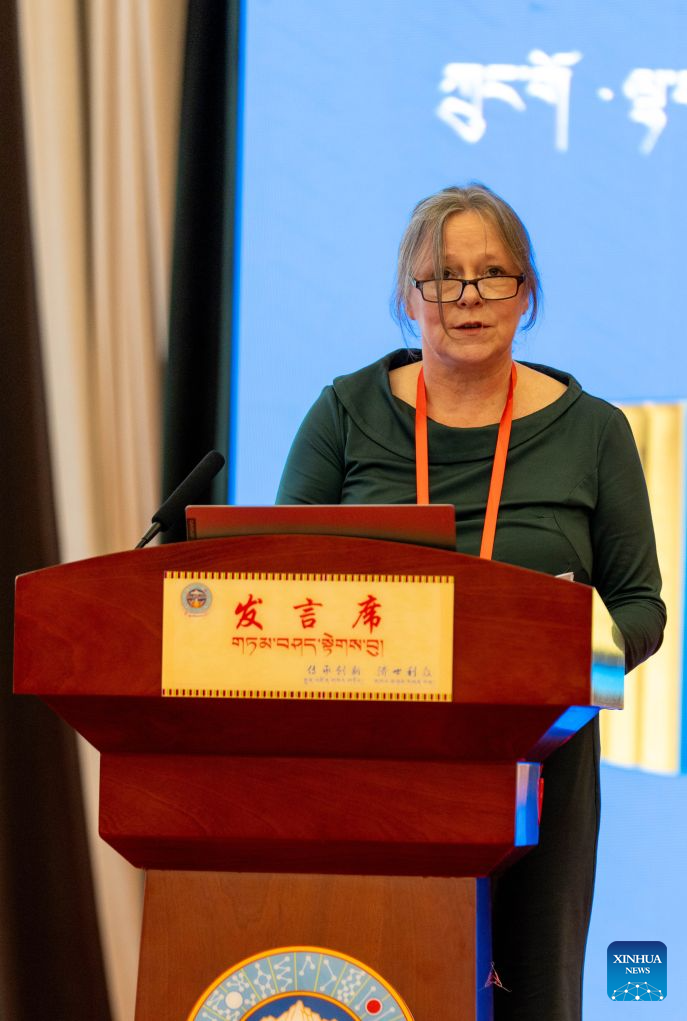
Among the participants was Katharina Anna Sabernig, a lecturer from the Medical University of Vienna, Austria, who first encountered Tibetan medical murals at Labrang Monastery in Gansu Province in 1994. She later returned and began delving deeper into the works.
"I saw these murals and I started to get deeper and deeper and to understand all this," Sabernig recalled.
Mary Caroline Wyatt, a scholar with dual British-Greek citizenship, began collaborating on an English translation of texts about Tibetan medical thangkas last September. She noted that complete English versions have long been scarce.
"Our translations target professional readers so that we preserve many specialized, traditional terms," said Wyatt.
The event was hosted by the regional health commission and co-organized by the regional Tibetan medicine hospital and Xizang University of Tibetan Medicine.
Xizang has formulated and implemented a series of policies on promoting Tibetan medicine and encouraging innovation. According to a government white paper released last year, the region has 51 public Tibetan medicine institutions, employing 5,287 professionals and operating 3,260 beds, up from 28 institutions, 2,232 professionals and 1,364 beds in 2012.
In April, China rolled out its first national recommended standard for ethnic-medicine disease classification and codes for Tibetan medicine.
Tsering, president of the regional Tibetan medicine hospital, said inscriptions on the UNESCO Memory of the World Register and China's national documentary heritage list have brought Tibetan medicine to a broader global audience.
"We will make the most of these opportunities to promote academic exchanges and clinical collaboration worldwide," Tsering said.
This photo taken on Aug. 20, 2026 shows a scene of the second international academic symposium on The Four Treatises of Tibetan Medicine and Tibetan medical thangkas in Lhasa, southwest China's Xizang Autonomous Region. (Xinhua/Liu Zhoupeng)
    This photo taken on Aug. 20, 2026 shows a scene of the second international academic symposium on "The Four Treatises of Tibetan Medicine" and Tibetan medical thangkas in Lhasa, southwest China's Xizang Autonomous Region. (Xinhua/Liu Zhoupeng)
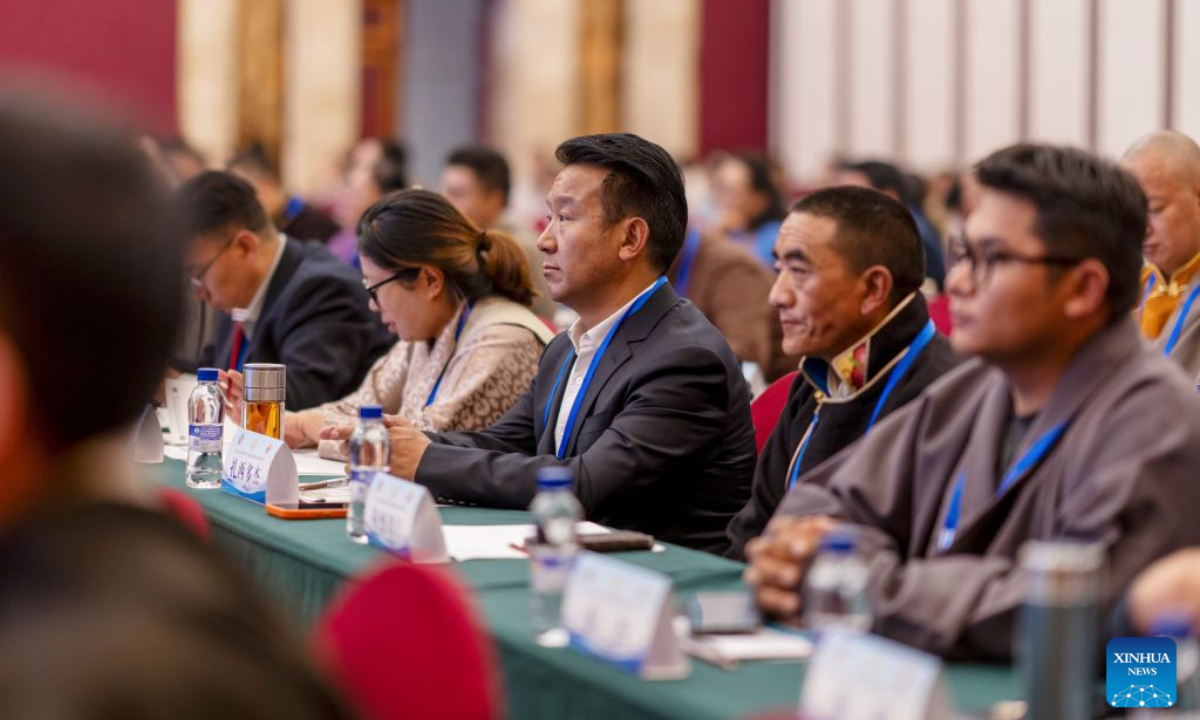
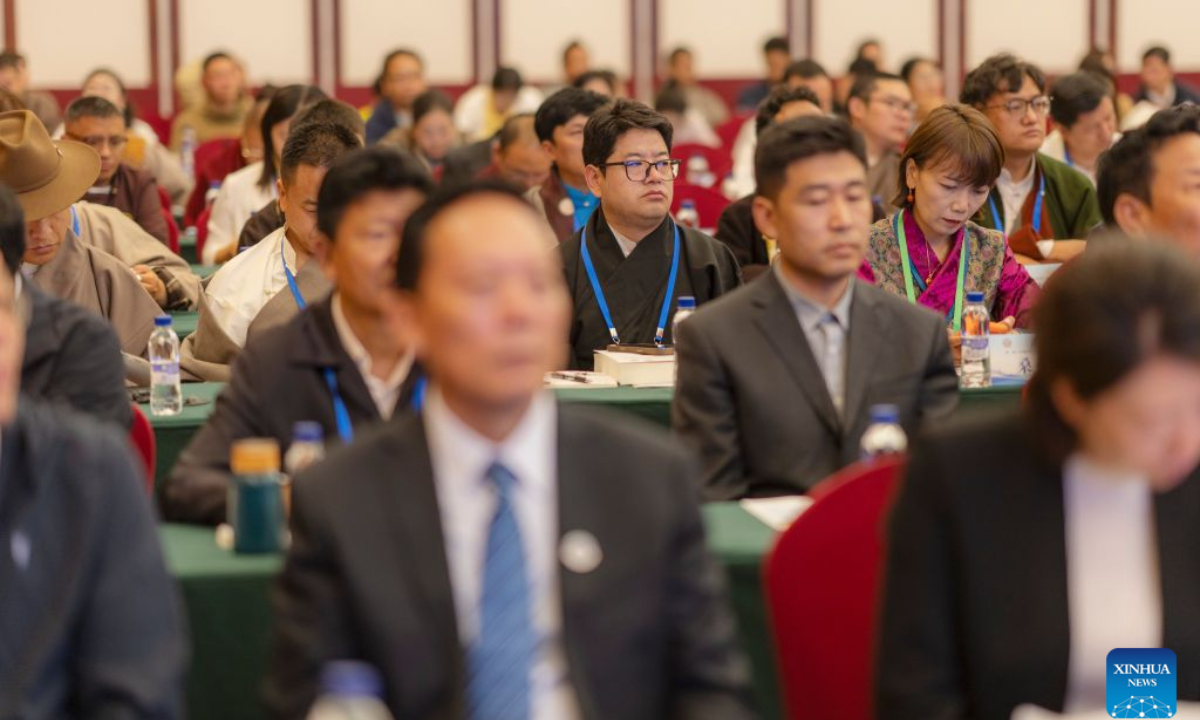
This photo taken on Aug. 20, 2026 shows a scene of the second international academic symposium on The Four Treatises of Tibetan Medicine and Tibetan medical thangkas in Lhasa, southwest China's Xizang Autonomous Region. (Xinhua/Tenzing Nima Qadhup)
    This photo taken on Aug. 20, 2026 shows a scene of the second international academic symposium on "The Four Treatises of Tibetan Medicine" and Tibetan medical thangkas in Lhasa, southwest China's Xizang Autonomous Region. (Xinhua/Tenzing Nima Qadhup)
Katharina Anna Sabernig from the Medical University of Vienna, Austria, delivers a speech at the second international academic symposium on The Four Treatises of Tibetan Medicine and Tibetan medical thangkas in Lhasa, southwest China's Xizang Autonomous Region, Aug. 20, 2026. (Xinhua/Tenzing Nima Qadhup)
    Katharina Anna Sabernig from the Medical University of Vienna, Austria, delivers a speech at the second international academic symposium on "The Four Treatises of Tibetan Medicine" and Tibetan medical thangkas in Lhasa, southwest China's Xizang Autonomous Region, Aug. 20, 2026. (Xinhua/Tenzing Nima Qadhup)
。    台伪空军向美国采购66架F-16 Block70战机,首批两架抵达。有说法,首次3架战机,编号6722、6727、6728的战,但最后一架还没有抵达,尚未有明确的说法。        17日,由美国洛南卡罗来纳州的工厂起飞,转赴德州的沃斯堡基地。据悉,这批战机均搭载保形油箱,以及3颗翼下油箱。    台伪空军现役主力机型的F-16,为139架F-16A/B Block 20战机。

二 | 这些战机有超视距作战、还有精确对地和反舰能力,使用了AN/APG-66(V)3脉冲多普勒雷达,最大探测距离约为150公里。    首批交付时间1997年,2001年交付结束,这批战机是特供版本,配备F100-PW-220发动机。因为使用AN/APG-66(V)3雷达,可发射AIM-7麻雀半主动弹。早期型号不具备超视距作战,后来兼容AIM120中距弹,有了超视距空战能力。    但是,Block 20批次战机服役已接近30年, 还停留在四代机的水平,距离四代半机还有着不小的差距。所以,升级该批次战机至F-16V标准,换装AN/APG-83有源相控阵雷达,这是F-35的APG-81雷达缩减版。    换装新雷达,该机型升级为“四代半”战斗机平台,而新交付的机型与目前现役升级后的F-16V最大差异,在于机背巨大且长型的航电舱空间,这也是F-16D双座新机的独有设计。        还有就是前面说的,配备保形油箱,就是紧贴机身或机翼表面,并且和机身外形高度贴合的存储燃油设计,如该批次的F-16战斗机背脊保形油箱。相比之前的F-16A/B,有更远的作战半径,或者在同等航程下携带更多更重的武器弹药。    你说,台湾海峡如此狭窄,新交付的F-16配保形油箱,究竟要做啥?很显然,这就是增加作战航程。

三 | F-16 Block70是F-16最新升级批次,性能已达到四代半战机,被称作为“超级毒蛇”或“蝰蛇”,而美国真的下血本,把多项五代机技术下放了。    兼容Link-16数据链,还配备“狙击手”瞄准吊舱、红外搜索与跟踪系统,除了要探测隐身战机,想不出来还有其他的用途,理论上具备发现歼-20的可能性。

四 |     值得一提的是,尽管Block70是最先进型号,但减少雷达反射面积,有一定的隐身性能。毕竟依旧第四代非隐身战斗机,与歼-20、歼-35A等第五代隐身战机存在代差。        同时,美国交付速度很慢,没有稀土供应舰随时被中断,航电系统和雷达,只能拉胯。

五 | 真的到了统一那天,就这装备还不够打的。

六 | 返回,查看更多

Current article:http://www.cuancuguanzhongnieqinyazhun.cyou/psda/20260826/4097.html

Published on:00:57:04


  • 本文标签:
  • 阿凡达