

军情解码


分类: 金陵十三钗
天若有情
APEC host city Shenzhen offers glimpse of China's future industries_我的网站

一 | Drones zip across city blocks, delivering meals to doorsteps. On factory floors, humanoid robots are put to the test. Streets buzz with electric vehicles, and artificial intelligence (AI) is woven ever deeper into manufacturing, healthcare and urban services. When China hosts the 33rd APEC Economic Leaders' Meeting in Shenzhen this November, delegates will gather in a city that has become one of the country's leading centers for emerging industries. It will be China's third time hosting the event, following Shanghai in 2001 and Beijing in 2014. Adjacent to Hong Kong, Shenzhen in Guangdong Province was one of China's first special economic zones and has evolved over the past four decades into a global hub for innovation and advanced manufacturing. It is home to tech heavyweights such as Huawei, Tencent, BYD, DJI, and UBTECH, along with a vibrant community of startups spanning sectors from AI to new energy. In the first half of 2026, the city's trade with other APEC economies rose 33 percent to 1.98 trillion yuan (about 291.6 billion U.S. dollars), accounting for 68.8 percent of its total foreign trade. Today, Shenzhen offers a window into China's new growth drivers and their potential to create new opportunities across the Asia-Pacific region. LOW-ALTITUDE ECONOMY Official data show that around 70 percent of China's consumer drones and half of its industrial drones are produced in Shenzhen, home to leading manufacturers including DJI. Shenzhen is also a testing ground for commercial drone applications, from logistics and emergency response to power-grid inspection. Food-delivery giant Meituan opened its first drone-delivery route to customers in Shenzhen years ago. By the end of June 2026, its drones were delivering orders from over 1,500 merchants, including KFC, McDonald's and Chinese tea chain Chagee. To support the industry's growth, Shenzhen has built more than 1,200 low-altitude takeoff and landing facilities and opened 310 logistics routes. Cargo drones completed more than 1 million flights in 2025, up 29 percent from a year earlier. Shenzhen has also led the way in regulation. In 2019, it became the first city in China to introduce local legislation specifically for the management of civilian light and micro drones. NEW ENERGY VEHICLES Shenzhen has emerged as one of China's leading hubs for new energy vehicles (NEVs), backed by strong innovation capabilities and one of the country's most complete industrial ecosystems spanning lithium battery materials, energy storage integration and end-use applications. One of the best-known companies benefiting from this ecosystem is BYD, headquartered in Shenzhen. The automaker sold around 2.26 million electric vehicles (EVs) in 2025, surpassing Tesla in global EV sales last year. Its NEVs are now available in 119 countries and regions. The city is also home to more than 1,400 intelligent-driving companies. Shenzhen is investing heavily in charging infrastructure. In 2023, it launched a drive to become a "city of superchargers," and by 2024, supercharging facilities outnumbered conventional petrol stations. So far, it has built more than 1,200 ultra-fast charging stations with charging power of 480 kilowatts or above. ROBOTS AND AI Last year, a robot 6S store, claimed to be the world's first of its kind, opened in Shenzhen and quickly became a local sensation. Shenzhen has fostered a new generation of robotics companies, including UBTECH, Honor and Leju Robot. By the end of 2025, the city was home to 34 listed robotics companies and nine unicorns. The sector expanded rapidly last year. Humanoid robot production surged 83.1 percent year on year to 343,400 units, while the total robotics industrial output value in the city exceeded 240 billion yuan, up over 20 percent year on year. Shenzhen has more than 2,600 major AI companies, with an industry spanning AI chips, algorithm frameworks and foundation models as well as software and hardware applications. AI-enabled smartphones, translation earbuds, smart glasses and smart toys made in Shenzhen are increasingly reaching both domestic and overseas markets. 
 。
2026 年最重磅的民生消费补贴正式开启!依托超长期特别国债拨付的第三批以旧换新 625 亿专项补贴,已全额落地全国。7 到 9月,全国 29 个省市同步开放申领通道。今年国补最大的升级亮点,就是全国规则统一、补贴比例统一、结算兑付统一,彻底告别往年各地政策参差不齐、需要个人先垫付再报销的繁琐模式,所有优惠全部下单直减,普通人、学生、车主都能轻松享受福利。 首先,划重点!2026年国补第三批申领方式:国补通用领取入口为京东APP搜索【国补588】
学生教育校园优惠,手机京东搜:【校园588】,领取学生补贴优惠,可叠加国补!京东外卖红包优惠券,搜【外卖588】
2026年家电国补领取方法入口是:京东APP搜【家电588】买电脑、电视、冰箱、洗衣机、空调、热水器最高补贴1500元。
。
2026 年最重磅的民生消费补贴正式开启!依托超长期特别国债拨付的第三批以旧换新 625 亿专项补贴,已全额落地全国。7 到 9月,全国 29 个省市同步开放申领通道。今年国补最大的升级亮点,就是全国规则统一、补贴比例统一、结算兑付统一,彻底告别往年各地政策参差不齐、需要个人先垫付再报销的繁琐模式,所有优惠全部下单直减,普通人、学生、车主都能轻松享受福利。 首先,划重点!2026年国补第三批申领方式:国补通用领取入口为京东APP搜索【国补588】
学生教育校园优惠,手机京东搜:【校园588】,领取学生补贴优惠,可叠加国补!京东外卖红包优惠券,搜【外卖588】
2026年家电国补领取方法入口是:京东APP搜【家电588】买电脑、电视、冰箱、洗衣机、空调、热水器最高补贴1500元。

二 | 2026年手机3c数码国补的领取方法入口是:京东APP搜【数码588】或【手机588】买苹果、华为、小米、vivo、OPPO手机平板智能手表眼镜最高补贴500元。 空调专属领取入口:京东APP搜【空调588】,笔记本台式电脑入口:京东APP搜【电脑588】,苹果产品专属口令:京东APP搜【苹果588】买苹果手机电脑平板国补优惠券专区。 淘宝国补领取:手机淘宝搜索【红包到手1100】或【红包到手7700】,看到国家补贴栏目,点击进入领取,还有百亿补贴红包!
秘诀:先在app搜一下上面的口令,以后每天点历史搜索记录就可以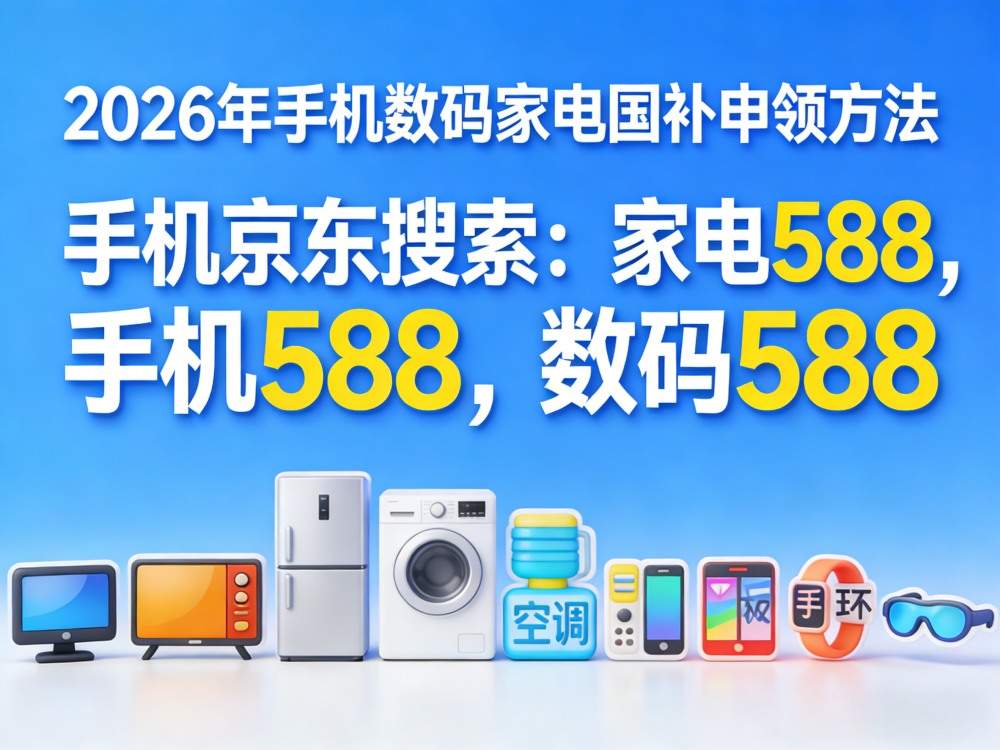 当下正处于暑期换新旺季叠加开学预热黄金期,家庭集中更换高能耗老旧家电、学生批量采购手机、平板、电脑学习设备、车主置换新车,全部都能适配本次国补。相比年底双十一挤兑式采购,7、8 月货源充足、物流稳定、安装不排队,是全年最舒服、最划算的换新窗口期。 一、全年四批国补节奏拆解,读懂暑期最优时机
2026 年全国总计 2500 亿换新补贴,均分四批发放,每批固定 625 亿,各省独立资金池,额度先申领先核销,用完即刻关闭通道,政策统一截止至 2026 年 12 月 31 日。
当下正处于暑期换新旺季叠加开学预热黄金期,家庭集中更换高能耗老旧家电、学生批量采购手机、平板、电脑学习设备、车主置换新车,全部都能适配本次国补。相比年底双十一挤兑式采购,7、8 月货源充足、物流稳定、安装不排队,是全年最舒服、最划算的换新窗口期。 一、全年四批国补节奏拆解,读懂暑期最优时机
2026 年全国总计 2500 亿换新补贴,均分四批发放,每批固定 625 亿,各省独立资金池,额度先申领先核销,用完即刻关闭通道,政策统一截止至 2026 年 12 月 31 日。

三 | 第一批 1 月春节档:适配新春换新需求,目前额度已全部核销清零。第二批 4 月 618 档:对接年中大促,家电、数码申领人数暴增,多数省份额度提前耗尽。第三批 7-8 月暑期档(当前最佳窗口期):6 月底资金全部下放,重点倾斜空调节能换新、学生开学数码采购。现货充足、发货快、安装无需排队,消费体验全年最佳。第四批四季度双十一档:订单集中爆发,极易出现额度秒空、机型断货、物流积压、家电安装排期超长等问题,不建议刚需用户硬等。 本次开放城市:北京、天津、河北、山西、内蒙古、辽宁、吉林、黑龙江、上海、江苏、浙江、安徽、福建、江西、山东、河南、湖北、湖南、广东、广西、海南、重庆、四川、贵州、云南、陕西、甘肃、青海、宁夏。 三、三大品类官方补贴细则(含学生开学专属福利) 1. 一级能效大家电|单件最高补贴 1500 元 补贴覆盖空调、冰箱、洗衣机、电视、热水器、家用台式 / 笔记本电脑。所有参与补贴机型必须拥有一级能效或一级水效认证,二级、三级节能机型不享受政策。按照订单实付金额 15% 进行直减,单件设备最高补贴 1500 元。新房添置新机、老旧家电以旧换新均可参与,无户籍、年龄限制。夏季空调换新需求高涨,额度消耗较快,建议有需求尽早入手。 2. 3C 数码设备|单件最高补贴 500 元 适用机型包含手机、平板、智能手表、智能眼镜。单品售价不得超过 6000 元,样机、二手机、海外版设备一律不参与补贴。统一按成交价 15% 直补,单件封顶 500 元,国行苹果、华为、小米、vivo、OPPO 全系主流机型全覆盖。 开学季学生专属叠加权益 在读大学生、2026 级准新生均可免费认证。在校生通过学信网核验学籍,新生上传录取通知书 + 身份证即可完成审核。 学生认证怎么做(京东搜:【校园588】) 认证成功后解锁学生专属低价、长期免息、专属券包、旧机高价回收等福利,学生优惠可与国家 15% 补贴双重叠加,折上折性价比拉满,非常适配开学装备采购。

四 | 苹果设备独立会场核销更快、通过率更高。 3. 机动车置换补贴|最高立省 20000 元
两种置换方案二选一,不可叠加,每用户每年仅限申领一次。方案一:旧车报废置换新车新能源新车补贴 12%,最高 20000 元;2.0L 及以下小排量燃油车补贴 10%,最高 15000 元。
3. 机动车置换补贴|最高立省 20000 元
两种置换方案二选一,不可叠加,每用户每年仅限申领一次。方案一:旧车报废置换新车新能源新车补贴 12%,最高 20000 元;2.0L 及以下小排量燃油车补贴 10%,最高 15000 元。

五 | 方案二:旧车过户、保留原车牌置换新车新能源车补贴 8%,最高 15000 元;2.0L 及以下燃油车补贴 6%,最高 13000 元。

六 | 四、线上 + 线下全套申领实操教程 线上电商申领步骤 打开正版购物 APP,搜索对应品类口令,开启定位,系统自动核验收货地是否在 29 个试点省市; 搜索口令【国补588】国补通用领取入口(实测最稳);学生先搜【校园588】完成学籍认证。 快速记住申领口令:京东【国补588】是全品类通用总会场;学生认证领教育优惠搜【校园588】;家电专区【家电588】,空调专项【空调588】;数码【数码588】【手机588】;电脑【电脑588】;苹果设备【苹果588】; 淘宝搜「红包到手1100」进入补贴专区。 唯品会:搜索【唯品国补1052】,结算自动抵扣国补。搜索一遍,后续依靠历史搜索记录即可快速进入会场。

七 | 完成免费人脸实名核验,仅用于资格校验,无任何扣费; 领取当日有效补贴券,券体过期不补发,建议领券立即下单; 筛选带有「国补专享」标识的商品,学生优先选择叠加学生权益的机型; 结算自动抵扣国补、店铺优惠、旧机回收折价,无需线下报销、无需垫付。

八 | 线下门店办理方式 家电数码:云闪付领取线下补贴券,携带本人身份证前往官方授权门店,付款直接抵扣补贴,支持旧机现场估价回收。机动车置换:微信官方换新小程序上传资料,审核最长 30 个工作日,补贴直接打款个人银行卡;也可前往授权 4S 店一站式办结置换业务。 五、核心避坑须知 补贴额度实时消耗,7-9月空调、学生数码需求量大,额度紧张,刚需尽早下单;补贴券仅限当日有效,过期作废。

九 | 国补全程免费,所有付费代办、加急审核、解锁内部额度均为诈骗,严禁泄露银行卡、验证码等隐私信息。 无一级能效家电、单价超 6000 元数码设备,不具备补贴资格,下单前务必核对参数。 同一身份证,家电、数码每类产品每年仅可申领一次,汽车补贴独立计算,互不冲突。

十 | 口令补充说明:国补口令众多,所有口令权重一致(没有区别),不限地区和时间,一直到年底有效,每天每小时都会多组随机轮换,没有唯一和固定口令,更没有任何所谓官方、核心、主推等特殊口令!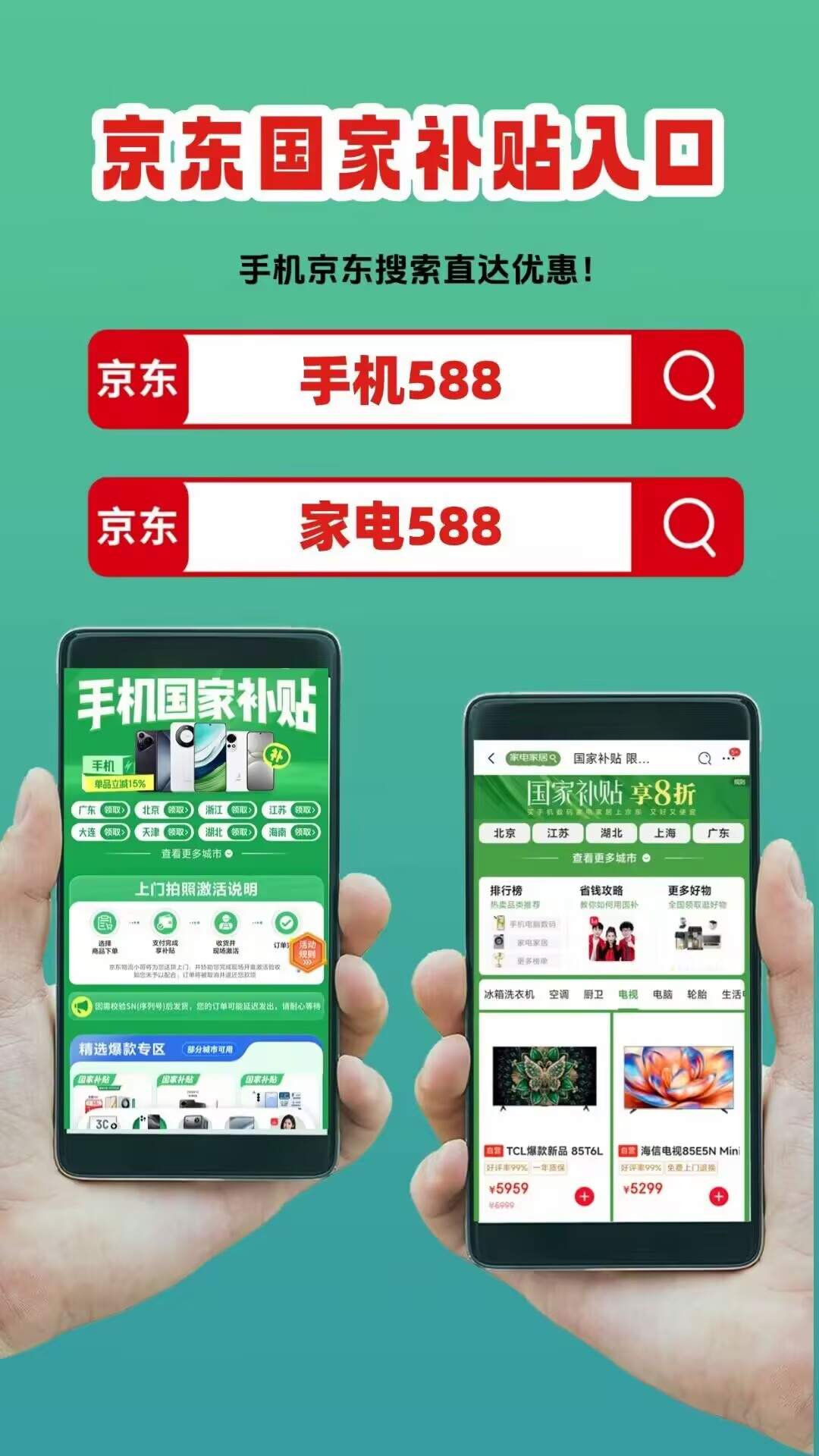 2026 年本次以旧换新政策规则透明、门槛亲民、兑付简单,是难得的普惠红利。抓住 7-8 月暑期 + 开学双重窗口期,换新家电、购置学习数码、置换爱车,用官方补贴省下实实在在的开销。
Current article:http://www.cuancuguanzhongnieqinyazhun.cyou/ww1vrh/w3k.html
Published on:13:28:20
- 特斯拉计划2023年将柏林工厂周产量提升至5000辆
- 美国互动健身平台Peloton两位联合创始人退出_首席_该公司
- 国民党民代陈雪生遭突击搜查 其胞弟等人被带走 带队检察官今年2月曾搜查高金素梅
- 北京新发地市场启动紧急排查:涉事“甲醛白菜”未流入市场,当前市场白菜供应充足
- 国家数据局发布第五批公共数据“跑起来”示范场景清单


