
???ڇ?;
Asking a PU schoolgirl to take off her hijab at her school gate, is an invasion on her privacy: Justice Dhulia_我的网站

一 | New Delhi, Oct 13 (UNI) One of the judges in the Supreme Court bench, Justice Sudhanshu Dhulia, differed with the view of his colleague, Justice Hemant Gupta on many issues.
Justice Dhulia said that asking a pre university schoolgirl to take off her hijab at her school gate, is an invasion on her privacy and dignity.
"Asking a pre university schoolgirl to take off her hijab at her school gate, is an invasion on her privacy and dignity. It is an attack on their dignity, and then ultimately it is a denial to them of secular education. These are clearly violative of Article 19(1)(a), Article 21, and Article 25(1) of the Constitution of India," Justice Dhulia said, in his verdict.
"Under our Constitutional scheme, wearing a hijab should be simply a matter of Choice. It may or may not be a matter of essential religious practice, but it still is, a matter of conscience, belief, and expression. If she wants to wear hijab, even inside her class room, she cannot be stopped, if it is worn as a matter of her choice, as it may be the only way her conservative family will permit her to go to school, and in those cases, her hijab is her ticket to education," Justice Dhulia said, in his verdict.
Justice Dhulia even went onto say that the unfortunate fallout of the hijab restriction would be that we would have denied education to a girl child. A girl child for whom it is still not easy to reach her school gate.This case here, therefore, has also to be seen in the perspective of the challenges already faced by a girl child in reaching her school.
"The question this Court would put before itself is also whether we are making the life of a girl child any better by denying her education merely because she wears a hijab!," Justice Dhulia questioned?
Our Constitution has visualised a just society and it is for this reason that the first virtue that is secures for the citizens is ‘Justice’ which is the first of our Preambular promises, he said.
On the other hand, the judge heading the bench of the Supreme Court, Justice Hemant Gupta, differed with the view of Justice Sudhanshu Dhulia and said that the Government (Karnataka) Order cannot be said to be contrary to the State goal of promoting literacy and education as mandated under the Constitution.
"Article 21A is not applicable as all the students are over 14 years of age. The students have a right to education under Article 21, but not of insisting on wearing something additional to the uniform, in a secular school, as a part of their religion," Justice Gupta, heading the bench of the Top Court said.
"Secularism applicable to all citizens. Permitting one religious community to wear religious symbols would be antithesis of secularism. Govt Order can't be said to be against secularism or objective of Karnataka Education Act," Justice Gupta in his 133-page, out of 209-page, verdict said.
"It can't be said that State is restricting the access to education to the girl students through such an Order. The Government Order only ensures that the uniform prescribed is adhered to by the students and it cannot be said that State is restricting the access to education to the girl students through such an Order, Justice Gupta said.
He went on to say that the Act itself contemplates providing of opportunities and facilities in a healthy manner and maintaining the dignity of childhood and youth so that there is no moral or material abandonment. "The uniform for the students has been prescribed so that there is no distinction between the students coming from diverse background and that each student grows in an environment of equality, fairness and equal opportunities," Justice Gupta said.
The uniform is an equalizer of inequalities. Therefore, prescribing uniform for children at an impressionable age is not only important but has a salutary effect on the mental development of the child to grow in the environment of oneness, he said.
Justice Gupta, find that the following 11 questions arise for consideration in the present appeals:
Whether the appeals should be heard along with Kantaru Rajeevaru (Right to Religion) and/or should the present appeals be referred to the Constitution Bench.?
Whether the State Government could delegate its decision to implement the wearing of uniform by the College Development Committee or the Board of Management or otherwise on headscarves is ex facie violative of Section 143 of the Act?
What is ambit and scope of the right to freedom of ‘conscience’ and ‘religion’ under Article 25? What is the ambit and scope of essential religious practices under Article 25 of the Constitution?
UNI SM BAV GNK。
为进一步畅通公共交通出行“最后一公里”,市交通运输局近期聚焦市民换乘需求,会同济南轨道交通集团在地铁部分站点创新增设“站内公交候车点”,将公交候乘服务前置至地铁站内公共空间,让市民换乘体验更舒适、更从容。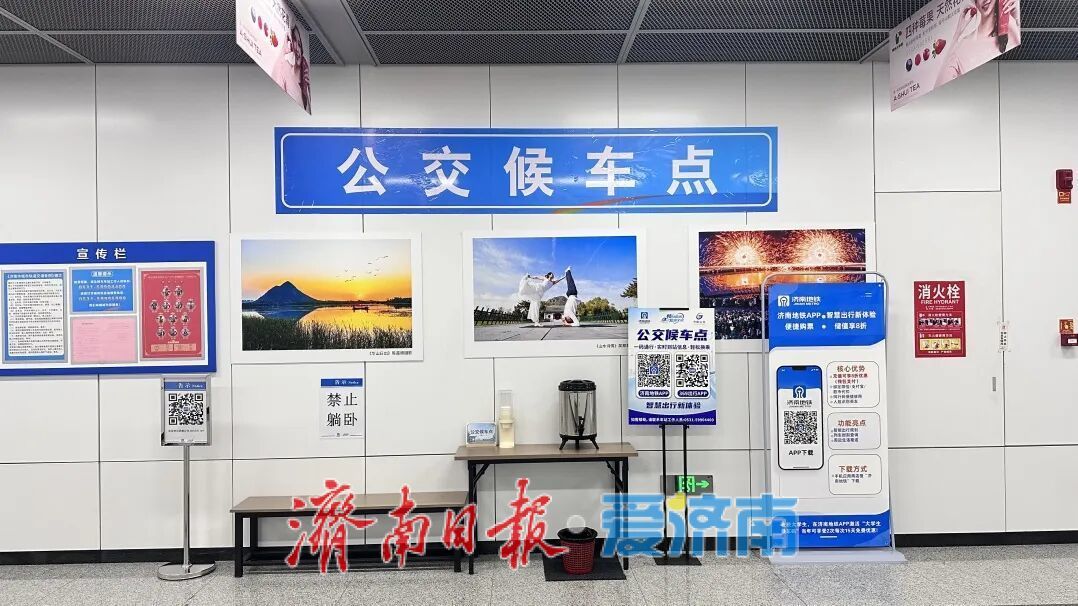


二 |
Current article:http://www.cuancuguanzhongnieqinyazhun.cyou/xeph/20260826/7836.html
Published on:17:28:15